女科学家论坛
女科学家论坛(Forum on Women in Science)是颜宁教授于2015年在清华大学发起并组织的年度论坛,广泛深入地探讨了女性在科研及相关领域所面临的诸多问题。2025年第十一届女科学家论坛即将拉开帷幕,本次我们有幸邀请到多位深耕科研一线的优秀女性学者,她们将带来专业分享与思想碰撞。
论坛时间
时间:2025年11月9日(星期日)16:00
Time: 4:00 p.m., Sunday, November 9, 2025
论坛地点
地点:深圳市光明生命科学园A栋12楼深圳医学科学院
Venue: SMART, 12F, Building A, Guangming Life Science Park, Shenzhen
论坛嘉宾
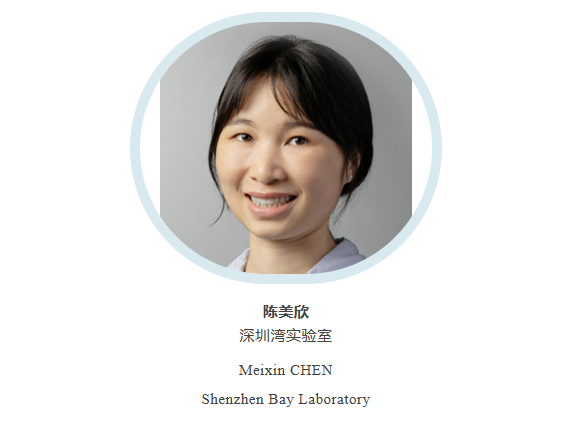
陈美欣博士,博士生导师,特聘研究员,长期致力于宿主免疫与病原感染互作。陈美欣博士的研究揭示DNA识别受体cGAS蛋白泛素化在防御病原感染过程中的重要功能与机制,首次利用代谢物识别器等工具揭示宿主细胞中代谢物衣康酸的抗菌通路。陈美欣博士的研究工作完善有关宿主与病原互作的知识体系。成果发表于Science、Molecular Cell、Nature Microbiology、Advanced Science、Nature Communications等期刊。
Dr. Meixin Chen, principal investigator, her work focuses on host innate immunity and pathogen-host interactions. Her research has elucidated the critical role and mechanism of cGAS ubiquitination in defense against pathogen infection and, using metabolite biosensor, uncovered an itaconate-based antibacterial pathway in the host. Dr. Chen’s research has advanced our understanding of host-pathogen interplay, with findings published in Science, Molecular Cell, Nature Microbiology, Advanced Science, and Nature Communications.
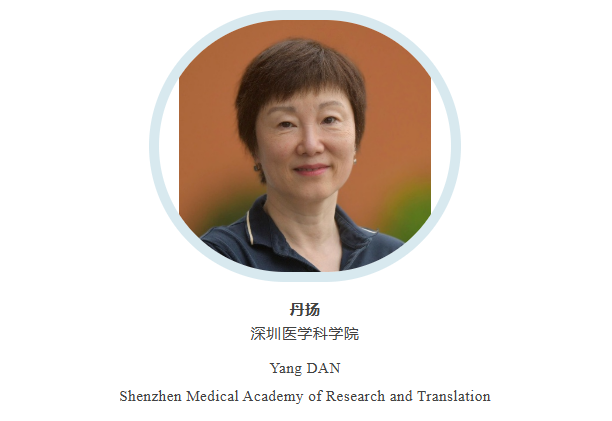
丹扬,深圳医学科学院神经调控与认知研究所(Institute of Neuromodulation and Cognition,简称INC)所长、资深研究员。2018年当选为美国国家科学院院士,2025年当选美国艺术与科学院院士。曾任霍华德·休斯医学研究所(HHMI)研究员(2008-2025)。
丹扬教授长期致力于神经科学研究,在视觉感知、注意、睡眠的神经机制领域做出了重要贡献。近年来,她运用多种生理学和分子生物学前沿技术,全面解析调控睡眠的神经环路,开启了睡眠研究领域的新篇章。
目前,丹扬教授团队以小鼠和非人灵长类为模型,采用脑电/肌电记录、在体双光子成像、在体电生理记录、神经示踪、光遗传/化学遗传学操作、高通量测序、分子遗传操作、细胞和分子生物学等多种实验手段开展研究,致力于解决意识的神经基础以及有关睡眠的两个基本问题:为什么睡眠?以及如何调控睡眠?
Yang DAN, Director, Senior Principal Investigator, Institute of Neuromodulation and Cognition, Shenzhen Medical Academy of Research and Translation. In recognition of her contributions to neuroscience, Professor Dan was elected to the US National Academy of Sciences (2018) and the American Academy of Arts and Sciences (2025). Professor Dan was also elected a Howard Hughes Medical Institute Investigator in 2008 (2008-2025).
Professor Dan's team aims to crack the neural basis of consciousness and two fundamental questions related to sleep: why do we sleep, and how is sleep regulated? To answer these questions, they use mice and non-human primates as animal models and employ a variety of experimental methods, including electroencephalogram/electromyogram recordings, in vivo two-photon imaging, in vivo electrophysiological recordings, neural tracing, optogenetic/chemogenetic manipulations, high-throughput sequencing, molecular genetic manipulations, and cellular and molecular biology.
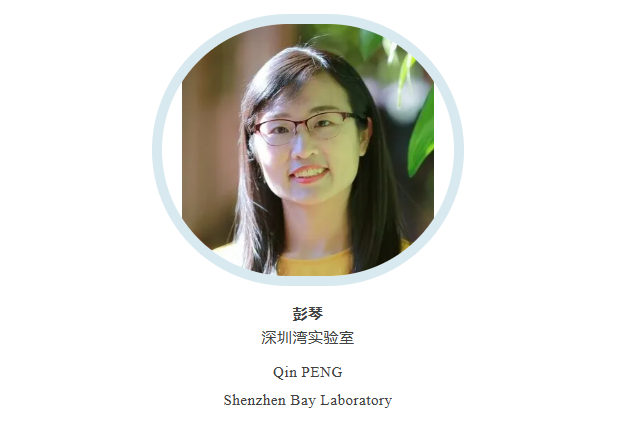
彭琴,深圳湾实验室系统与物理生物学研究所特聘研究员,本科毕业于重庆大学(2010),博士由重庆大学(2010-2012)-美国伊利诺伊大学香槟分校(2012-2013)-美国加州大学圣地亚哥分校联合培养(2013-2015),博士后(2015-2017)及助理项目科学家(2017-2020)师从美国加州大学圣地亚哥分校王英晓教授和钱煦教授,2020年9月加入深圳湾实验室。曾入选广东省珠江人才计划青年拔尖人才等。主要从事细胞核力学与表观遗传调控研究。为了实时“点亮”活细胞与活体内细胞核的力学信号和表观遗传修饰,课题组长期致力于可遗传编码的新型光学成像探针的开发,为细胞周期和细胞命运转化等基本生物学问题解析了新机制,对心血管、肿瘤等重大慢病及衰老过程中的力-表观遗传调控新机制进行研究,研发新型诊疗技术,发掘新靶标。
Dr. Qin Peng is a junior PI at the Institute of Systems and Physical Biology, Shenzhen Bay Laboratory. She received her Bachelor’s degree in Bioengineering from Chongqing University in 2010, and then she pursued her PhD through a joint program spanning Chongqing University (2010-2012), the University of Illinois at Urbana-Champaign (2012-2013), and the University of California, San Diego (2013-2015). From 2015 to 2017, Dr. Peng did her postdoctoral research at UCSD, and later served as an Assistant Project Scientist from 2017 to 2020, under the mentorship of Dr. Peter Yingxiao Wang and Dr. Shu Chien. In September 2020, she established her independent research group at Shenzhen Bay Laboratory. Her lab focuses on nuclear mechanics and epigenetic regulation, employing an interdisciplinary approach that integrates cutting-edge technologies such as fluorescence resonance energy transfer (FRET) biosensors, 4D epigenetic imaging, chromatin labeling, biomechanics, and multi-omics. The ultimate goal is to visualize nuclear dynamics in real-time and identify critical mechano-epigenetic regulators as potential therapeutic targets for diseases and aging. As such, the success of the project should have transformative impact in the field of epigenetics and mechanobiology at single cell levels and in live animals, by uncovering novel therapeutic strategies to combat cancer progression and aging. Dr. Peng has secured several grants, including NSFC grants, the Guangdong Pearl River Talent Program, and so on.
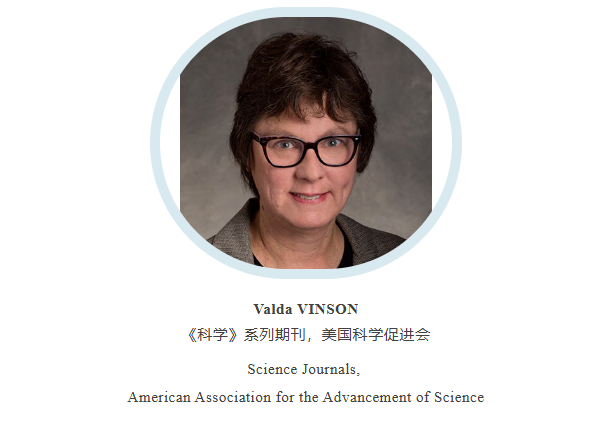
Valda Vinson现任《科学》系列期刊执行编辑,负责五大《科学》旗下期刊的研究内容战略与编辑政策制定。她于1999年开启出版生涯,初任《科学》期刊副编辑,负责结构生物学、生物化学与生物物理领域的研究论文审稿工作。2013年升任副主编,2018年被任命为生命科学领域研究内容总编辑。她在南非获得化学硕士学位,于约翰斯·霍普金斯大学取得博士学位。在加入《科学》期刊之前,她曾于南非西开普大学担任高级讲师两年。
Valda Vinson is the Executive Editor overseeing research content strategy and editorial policy, for five Science journals. She started her career in publishing in 1999 as an Associate Editor at Science handling research papers in the areas of structural biology, biochemistry, and biophysics. In 2013 she became Deputy Editor, and in 2018 was appointed Editor, overseeing research content in the life sciences. She earned an M.Sc. in chemistry in South Africa, and a Ph.D. from Johns Hopkins University. Before joining Science, she spent two years as a Senior Lecturer at the University of the Western Cape, South Africa.
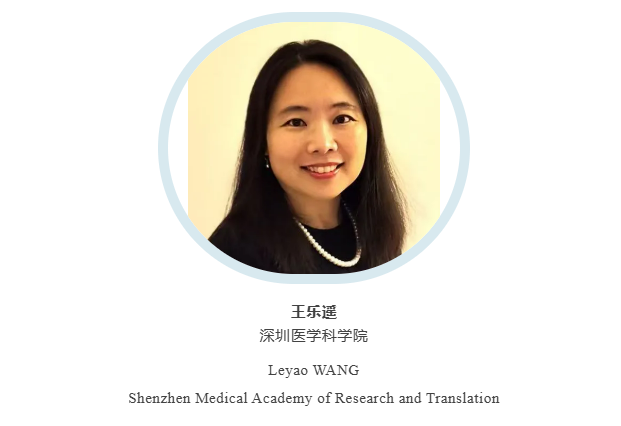
王乐遥博士2025年7月从美国回到中国就职于深圳医学科学院,任人类免疫学研究所高级研究员。她在美国约翰·霍普金斯大学和耶鲁大学完成博士后研究工作,并先后就职于美国华盛顿大学医学院和麻省大学公共卫生学院担任助理教授。王乐遥博士是美国国立卫生研究院评选出的2024至2025年度全美13位气候与健康学者之一。她注重女性科学家的成长与发展。迄今为止,在她培养的超过30位本科及研究生当中80%以上为女性。
Dr. Leyao Wang is currently a Principal Investigator at Institute of Human Immunology, Shenzhen Medical Academy of Research and Translation (SMART). Dr. Wang completed her postdoctoral training at the Johns Hopkins Medical Institute and Yale University School of Public Health; then she founded an interdisciplinary research program at Washington University School of Medicine, prior to joining University of Massachusetts Amherst School of Public Health and Health Sciences as an Assistant Professor. Dr. Wang was named an NIH Climate and Health Scholar for 2024-2025. Dr. Wang dedicated herself to promoting women in science. As of today, she has mentored more than 30 undergraduate and graduate students, with more than 80% being female.
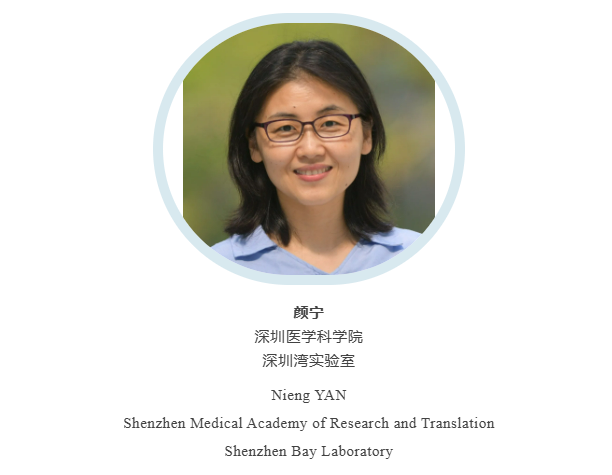
颜宁,中国科学院院士,深圳医学科学院院长,深圳湾实验室主任。2000年本科毕业于清华大学生物科学与技术系,2004年于普林斯顿大学分子生物学系获得博士学位,并在该系继续博士后研究;2007年受聘清华大学医学院,担任教授和博士生导师,2012年成为终身教授,2013年成为拜耳讲席教授。2017年受聘普林斯顿大学,成为首位雪莉·蒂尔曼终身讲席教授。2022年12月受聘成为深圳医学科学院(筹)创始院长。2023年3月受聘兼任深圳湾实验室主任。
她主要致力于跨膜运输蛋白的结构与机理研究,在国际上首次揭示人源葡萄糖转运蛋白、真核生物电压门控钠离子通道和钙离子通道等一系列具有重要生理与病理意义跨膜蛋白的原子分辨率结构,为理解相关疾病的致病机理及药物开发提供了分子基础。目前主要致力于针对疼痛的发病机理研究与药物研发。
YAN Nieng received her Bachelor’s Degree from the Department of Biological Science and Technology at Tsinghua University in 2000 and Ph.D. from the Department of Molecular Biology at Princeton University in 2004, where she continued her postdoctoral research. She joined School of Medicine, Tsinghua University as a professor in 2007. Ten years later, in 2017, she was recruited back by Princeton University and became the inaugural Shirley M. Tilghman Professor of Molecular Biology. In 2022, Yan Nieng served as the Founding President of Shenzhen Medical Academy of Research & Translation (SMART). In 2023, she served as the Director of Shenzhen Bay Laboratory (SZBL).
Dr. Yan’s primary research interest has been in the structural and mechanistic investigation of membrane transport proteins that are of tremendous physiological, pathophysiological, and pharmaceutical significance. She reported the first structures of the human glucose transporters GLUT1 and GLUG3, the eukaryotic voltage-gated sodium and calcium channels, and a number of proteins involved in sterol metabolism. Her present research program focuses on structure-guided mechanistic understanding and drug discovery for pain relief. Her achievements have won her numerous accolades.
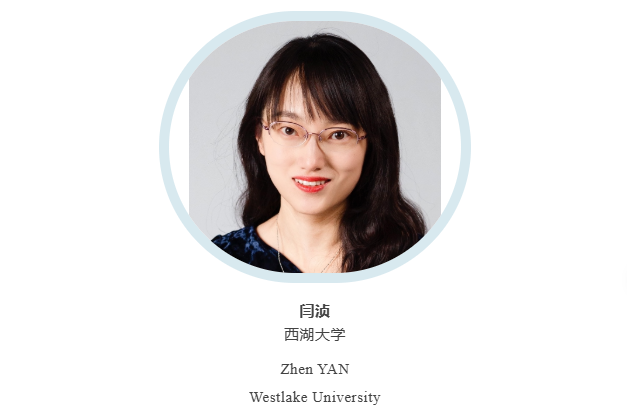
闫浈博士2011年获得南京大学学士学位,2016年获清华大学生物学博士学位,先后在清华大学、普林斯顿大学从事博士后研究,2019年加入西湖大学任独立研究员。2025年晋升为长聘副教授。闫浈实验室系统揭示了叶绿体蛋白转运系统的组分、组装、工作机制和进化多样性及保守性,为深入理解叶绿体蛋白的跨膜转运提供了坚实的理论基石,并为相关研究和潜在的应用奠定了关键基础(Cell 2022,Cell 2024a,Cell 2024b)。闫浈博士曾获科学探索奖、Rising Stars in Plant Sciences、卫志明青年创新奖、Dimitris N. Chorafas国际奖等荣誉。
Dr. Zhen Yan received her bachelor’s degree from the School of Life Sciences at Nanjing University in 2011 and received her Ph.D. in Biology from Tsinghua University in 2016. She subsequently conducted postdoctoral research at Tsinghua University and Princeton University before joining Westlake University as a principal investigator in 2019. In 2025, she passed the tenure review and was promoted to tenured associate professor. The Yan Lab specializes in deciphering the molecular mechanisms of protein translocation in chloroplasts (Cell 2022, Cell 2024a, Cell 2024b). Their landmark study has significantly advanced our understanding of fundamental chloroplast biology, earning recognition for its important contributions to the field. Dr. Yan has received numerous honors including the Xplorer Prize, Rising Stars in Plant Sciences, Wei Zhiming Young Innovator Award, Dimitris N. Chorafas Prize.
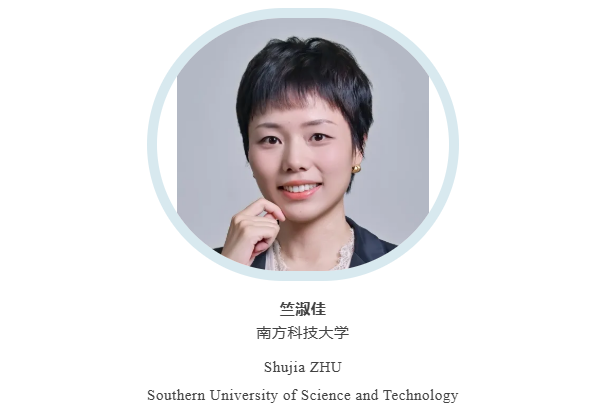
竺淑佳,南方科技大学生命科学学院教授、博士生导师。团队长期深耕于神经离子通道NMDA受体研究,阐述了NMDA受体的三维结构、门控机制、药理学及在体功能,聚焦快速抗抑郁新药的作用机制,解析神经系统自身免疫性脑炎的致病机制,为脑疾病新药研发提供了重要的理论基础。近五年以最后通讯作者身份在Cell(2025)、Nature(2021)、Neuron(2021、2025)、Nature Structural & Molecular Biology(2023、2024)等国际期刊发表系列论文。曾获科学探索奖、中国神经科学重大进展、钟南山青年科技创新奖、上海青年科技英才等荣誉。担任美国神经科学学会SfN program committee member(2024-2027年)。
Shujia Zhu is a Professor at the School of Life Sciences, Southern University of Science and Technology. Her research group has long been dedicated to studying the NMDA receptors, a key neuronal ion channel family in the brain. Their work elucidates the receptor's three-dimensional structure, gating mechanism, pharmacology, and physiological functions, with a particular focus on the mechanisms of novel fast-acting antidepressants and the pathogenesis of autoimmune encephalitis. In the past five years, she has published a series of papers as the last corresponding author in top-tier international journals, including Cell (2025), Nature (2021), Neuron (2021, 2025), and Nature Structural & Molecular Biology (2023, 2024). Her honors include the Xplorer Prize, the Outstanding Advances in Chinese Neuroscience Award, the Zhong Nanshan Youth Technological Innovation Award, and the Shanghai Youth Science and Technology Talent Award. She also serves as a Program Committee Member for the Society for Neuroscience (SfN) for the 2024-2027 term.